Why ads show up right after you talk about something: The truth most people don’t know
It may feel like your phone is listening when ads show up right after a conversation, but the truth is more about data and patterns. This article explains how tracking, shared signals, and algorithms work together to show you highly relevant ads.
Published By: Deepti Ratnam | Published: May 06, 2026, 04:16 PM (IST)
"Hey, do you know I just talked about buying running shoes .and suddenly, why am I getting ads on Instagram or Facebook for them?"
"Same bro, Same! The same is happening with me. I mentioned a trip to Switzerland once, and now every now and then I am seeing a hotel deal popping up on my Insta ID."
If it sounds familiar, then you are also one of us rowing in the same boat and not alone. There are many people like us who feel like their phone is secretly listening to their conversations. It gets frustrating, right? And sometimes it feels strange too! You talked about something once, and suddenly your social media app starts showing you ads related to your conversation. You might be wondering as if your device is listening to everything you are talking. But the real reason is way creepier and not as simple as 'your phone is spying.' There is a mix of data tracking, smart algorithms, and behavior patterns involved and working behind the scenes.
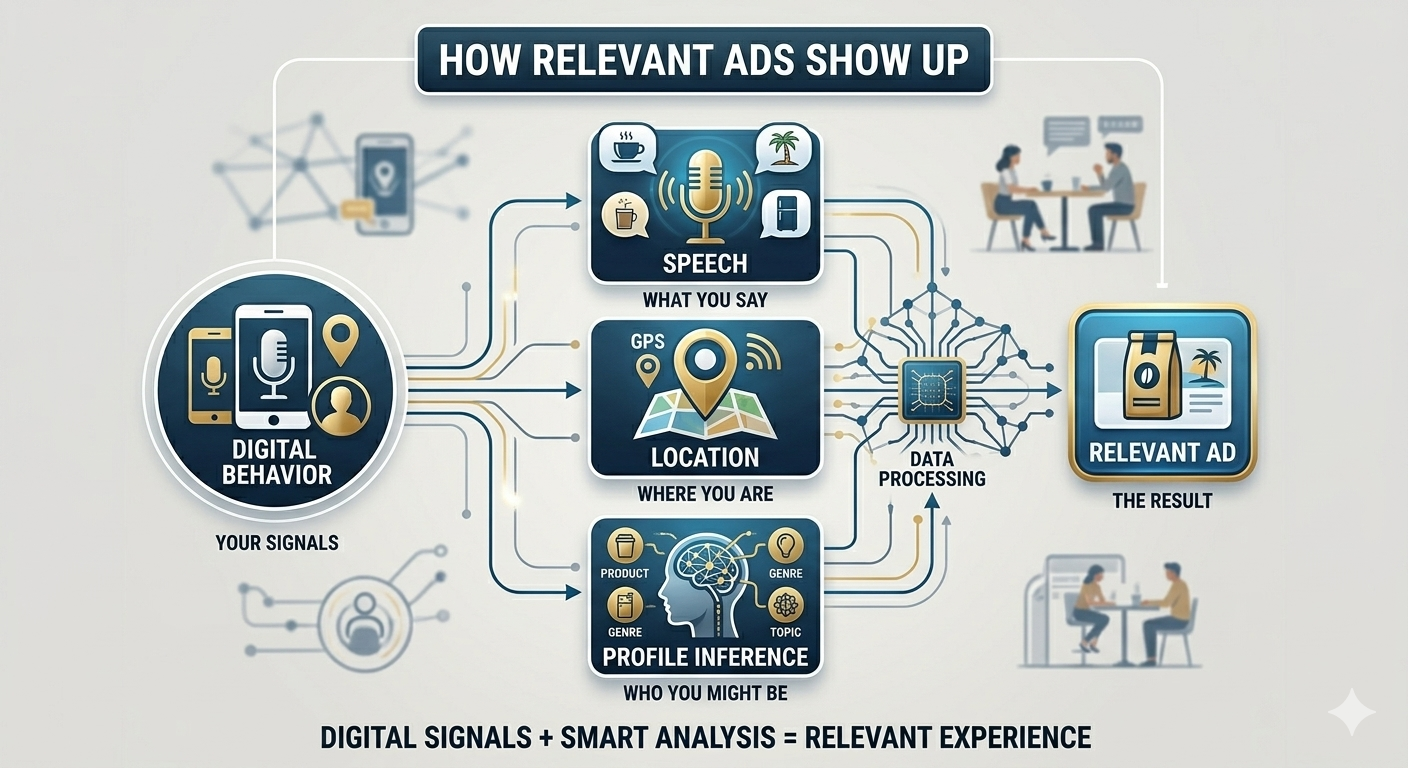
Why You Start Seeing Ads After One Conversation
It may feel to you that ads appear right after you mention something. Nevertheless, in most cases, this is not happening because of that one conversation you had. The ad systems already have a lot of data about your habits, behavior, and your search patterns. As soon as you end up your conversation, it starts matching what you have already searched, watched, or clicked earlier.
To understand this in a better way-
Let's assume you have checked a beauty product week ago, or paused on a similar video. Ads system will track these small actions and when you later talk about it, it will feel like the ads are reacting instantly. But in reality, it was already building up!
Sounds Scary!

How Data Tracking System Actually Works
There are certain ways in which apps and websites track your activity. These ways include your browsing history, behavior pattern, search history, location, and even how long you stay on a page. These signals, let alone, understand your interests.
Tech giants like Meta, Google, Amazon, and more use this data to show you targeted ads. They also influence your purchasing power. It is worth noting that they don't need to hear your conversation, as they already have enough information to predict what you might like and what you might buy.
This is the main reason that ads feel accurate. They are based on patterns, not just on one moment.
Role of Predictive Algorithms
Gone are the days, when we used to get ads randomly! Modern ad systems use advanced algorithms and that's the reason they almost feel perfectly timed to what we just talked about. These systems are not trained to just react, rather they are built to predict!
If you are a fitness enthusiast and recently searched for fitness tips, or watched a workout session on YouTube, or followed sports pages, then the ad system will assume that you are interested in related products like gym equipment, running shoes, gym gear, and more. Even if you only mentioned it once in conversation, the system was already expecting it.
This so called 'PREDICTIVE BEHAVIOR' makes the ads feel almost 'TOO PERFECT'

How Shared Data and Nearby Signals Work
Another interesting reason that ads feel connected to your conversations is shared data. For example, if you are using the same Wi-Fi as friends or family, then their searches can influence your ad feed.
Now, you will wonder why you are receiving ads related to another person's search history! The reason is simple! This happens because ad systems sometimes group users based on location or network signals. Hence, you might end up seeing travel packages, if someone nearby you searched for it.
Fascinatingly, this creates the illusion for you that your personal conversation triggered the ad, but in reality it is a shared data pattern.
| Type | Description of Method | Data Sources Involved | Psychological/External Factors | User Mitigation Strategies |
| Data Tracking | Apps and websites track activity to understand user interests through historical behavior. | Browsing history, search patterns, location, and page dwell time. | Users may feel ads react instantly to conversations, but they are often the result of cumulative data. | Clear browsing history, turn off ad personalization, avoid clicking random ads, and use private browsing mode. |
| Predictive Algorithms | Advanced algorithms build profiles to predict future interests based on past activities rather than speech. | Search history, video views (e.g., YouTube), and social media follows. | Predictive behavior makes ads feel perfectly timed or coincidental, leading to the "too perfect" sensation. | Limit app permissions and manage data usage settings within specific platforms. |
| Shared Data and Network Signals | Ad systems group users based on proximity or shared connections, where one person's activity influences another's ads. | Shared Wi-Fi networks, location signals, and search history of friends or family. | Creates an illusion that a personal conversation triggered an ad when it was actually a nearby person's search. | Restrict location access and manage network sharing permissions. |
| Psychological Phenomena | Human cognitive biases cause users to perceive links between conversations and ads that are not technically connected. | Microphone (explicitly stated by companies as not used for targeting). | Selective attention (noticing matching ads while ignoring others) and human memory patterns. | Understand the technical reality of predictions and data patterns to reduce suspicion. |

Why Do You Feel Your Phone is Listening
Timing is one of the crucial and key aspects that make the ad feel suspicious. You talk about something and soon after you see ads related to it. This results into creating a strong connection in your mind that your device is listening everything you are talking about.
However, most companies clearly states that they do not use your microphone for ad teaching or targeting. Instead, mostly they rely on large pool of data they collected and behavior tracking.
Plus, human memory plays an important role here. You will notice ads that match your conversation, but you will ignore the ones that do not. This is a selective attention, which is making you feel stronger than it actually is.
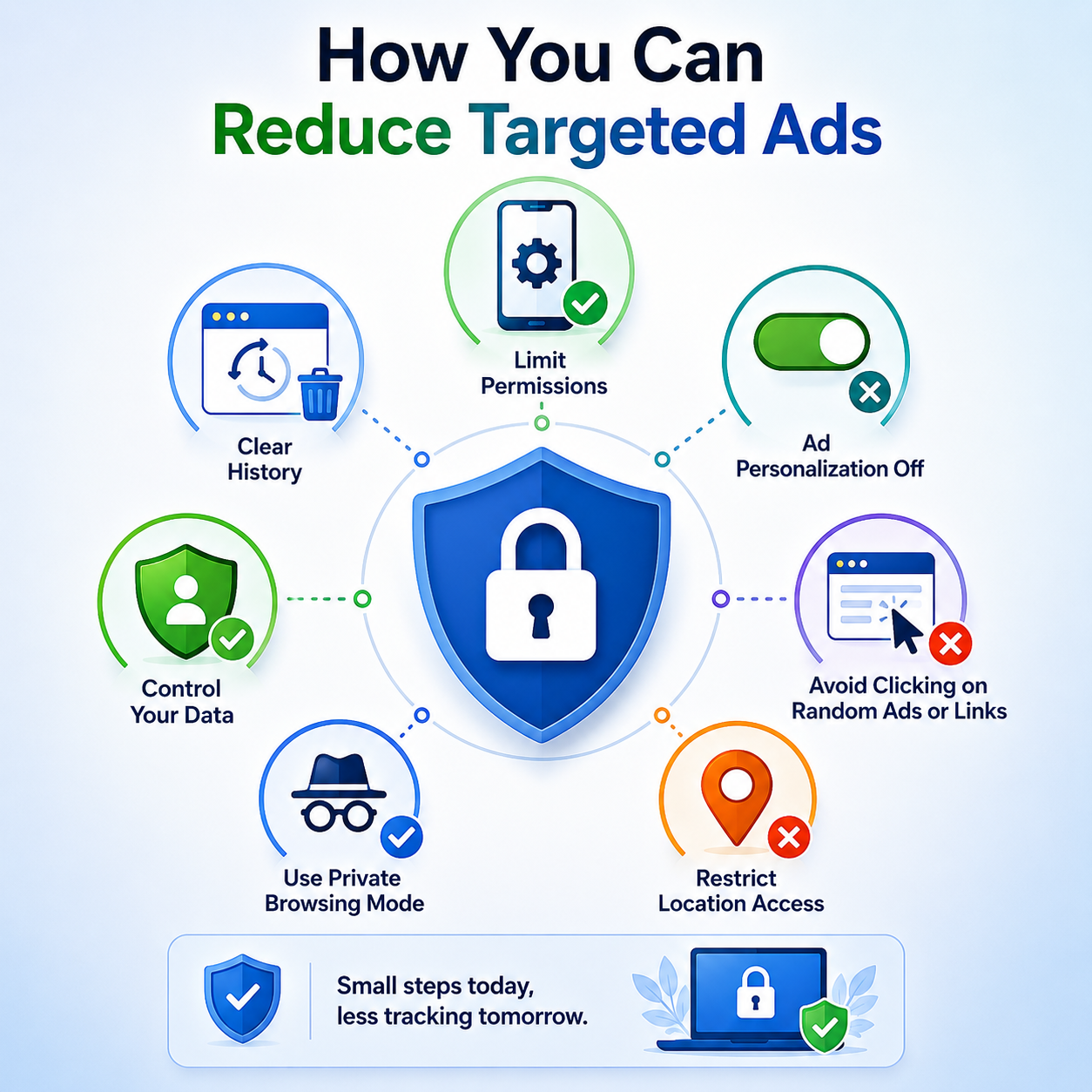
How You Can Reduce Targeted Ads
The answer is simple! If you don't want to see ads, you can limit app permissions and clear browsing history. Additionally, you can also turn off ad personalization settings.
Furthermore, most platforms allow you to control what data is used. So, make sure you avoid clicking on random ads or links, as it increases tracking signals.
You can also use private browsing mode and restrict location access. This will reduce targeted advertising.
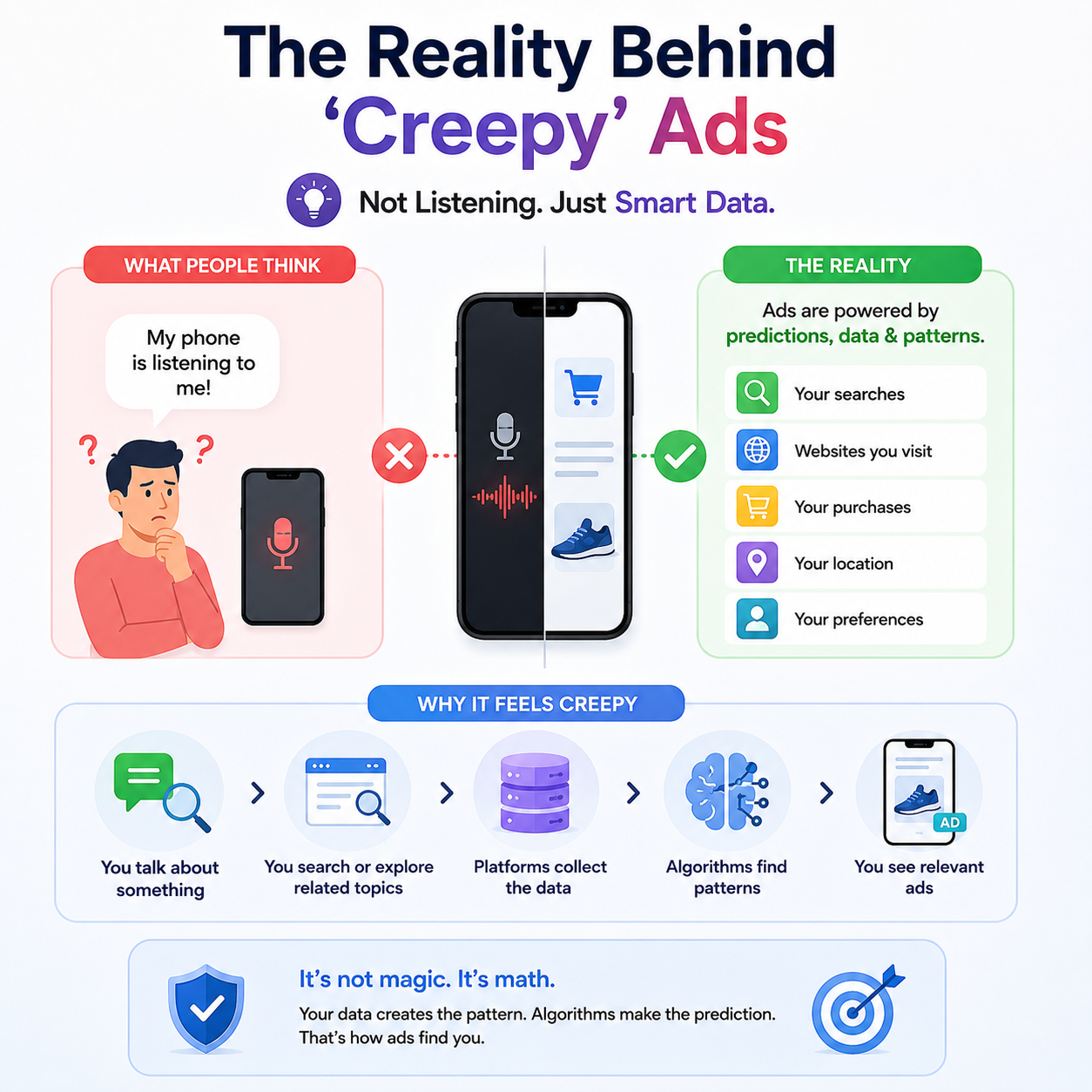
The Reality Behind 'Creepy' Ads
The idea that your device or phone is listening all the time sounds scary. But the reality and truth is way more technical than that. Always remember that ads are powered by predictions, data, and patterns.
Now, whenever someone says that their device is listening to their conversation, you will have detailed information about why they are feeling that way. You can explain the real reason to them and sound informed.
Get latest Tech and Auto news from Techlusive on our WhatsApp Channel, Facebook, X (Twitter), Instagram and YouTube.