What is El Niño and why is it heating up the planet again?
El Niño is a climate phenomenon caused by warming Pacific Ocean temperatures that can disrupt monsoons, increase heatwaves, trigger floods, and affect food, water, and weather systems globally.
Published By: Divya | Published: May 24, 2026, 01:06 PM (IST)
You probably have heard the term "El Ni o" quite often. From heatwave alerts across India to unusual floods in parts of the US, climate experts believe the warming Pacific Ocean may once again be reshaping weather patterns across the planet.
And this is not just another seasonal weather event. As per a National Geographic report, scientists are warning that this year's El Ni o could grow into a very strong one, potentially affecting rainfall, farming, water supply, food prices, and even daily life in several countries.
So, what exactly is El Ni o, and why does the world become nervous every time it returns? Know all about it here.
What exactly is El Ni o?
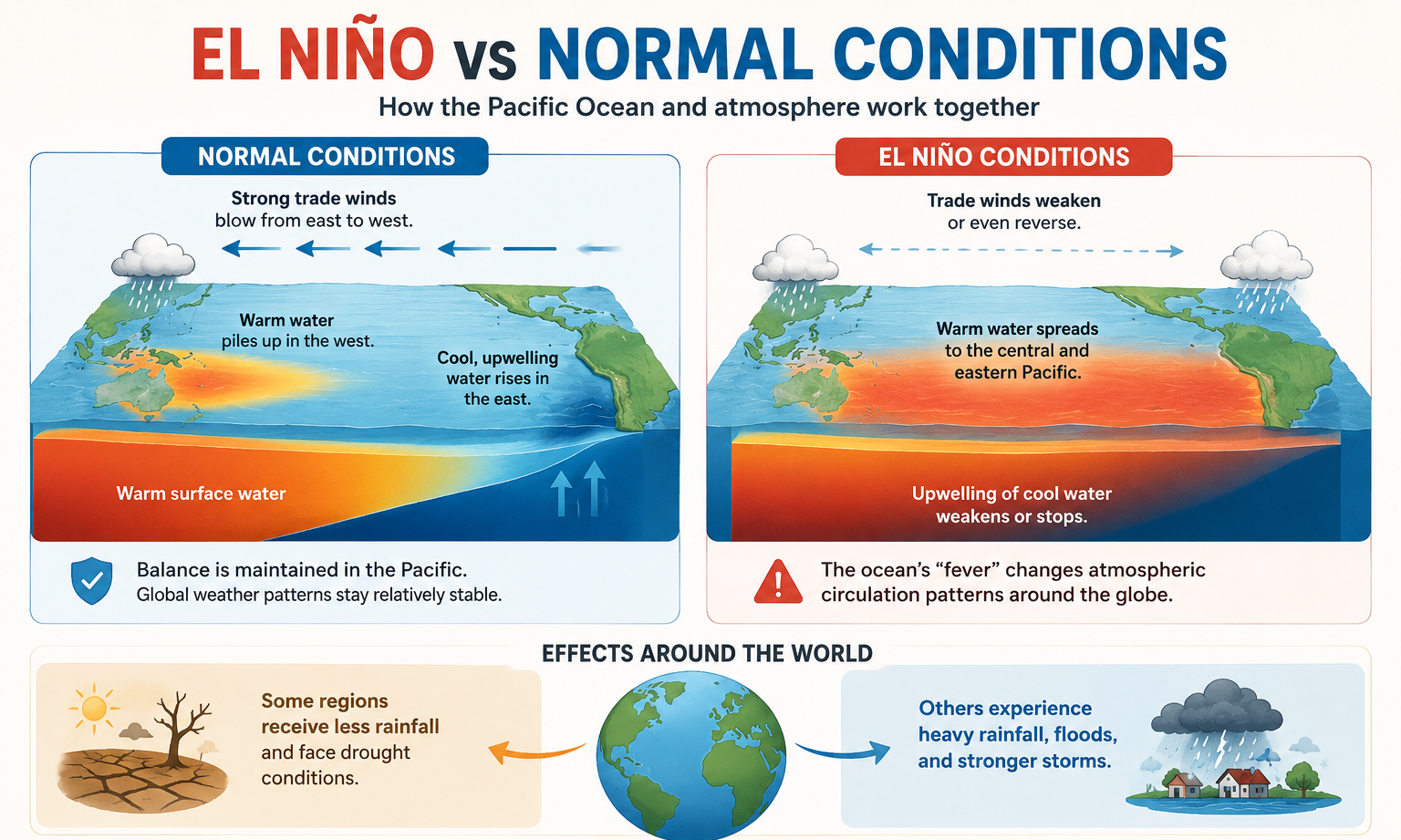
In simple words, know that El Ni o is a climate phenomenon that happens every few years when the central and eastern Pacific Ocean becomes warmer than normal. In general, strong trade winds help push warm water across the Pacific and maintain a balance in global weather systems. But during El Ni o, those winds weaken. As a result, warm water starts building up in the Pacific Ocean and changes atmospheric circulation patterns across the globe.
In simple words, the ocean's "fever" starts affecting the weather almost everywhere. Some regions receive less rainfall and face drought conditions. Others experience heavy rainfall, floods, and stronger storms.
El Ni o: Why does it matter so much for India
For India, El Ni o often becomes a serious concern because of its impact on the monsoon season. India receives a major portion of its yearly rainfall between June and September. Agriculture, water supply, reservoirs, and even electricity generation depend heavily on these rains.
During many El Ni o years, monsoon rainfall weakens. Meteorological agencies are already closely monitoring Pacific Ocean temperatures because forecasts suggest rainfall may remain below average this season.
But interestingly, El Ni o does not always simply mean "less rain." Scientists say rainfall patterns can become more unpredictable. That means some regions may witness long dry spells, while others suddenly receive intense downpours causing floods or landslides.
And the impact goes far beyond uncomfortable summer temperatures. A stronger El Ni o can lead to more intense heatwaves, water shortages, poor crop production, rising food prices, wildfires and droughts in some regions, and flooding in others. Farmers often struggle because the uncertainty makes planning difficult. Climate experts also warn that reservoirs may dry faster during extreme summers, increasing pressure on both drinking water and electricity demand.
Get latest Tech and Auto news from Techlusive on our WhatsApp Channel, Facebook, X (Twitter), Instagram and YouTube.